Lyft Swings To $9.7 Million Loss As Legal And Tax Items Hit Earnings
Record rides and bookings accompanied higher adjusted earnings, while legal, tax and regulatory items cost $117.9 million.


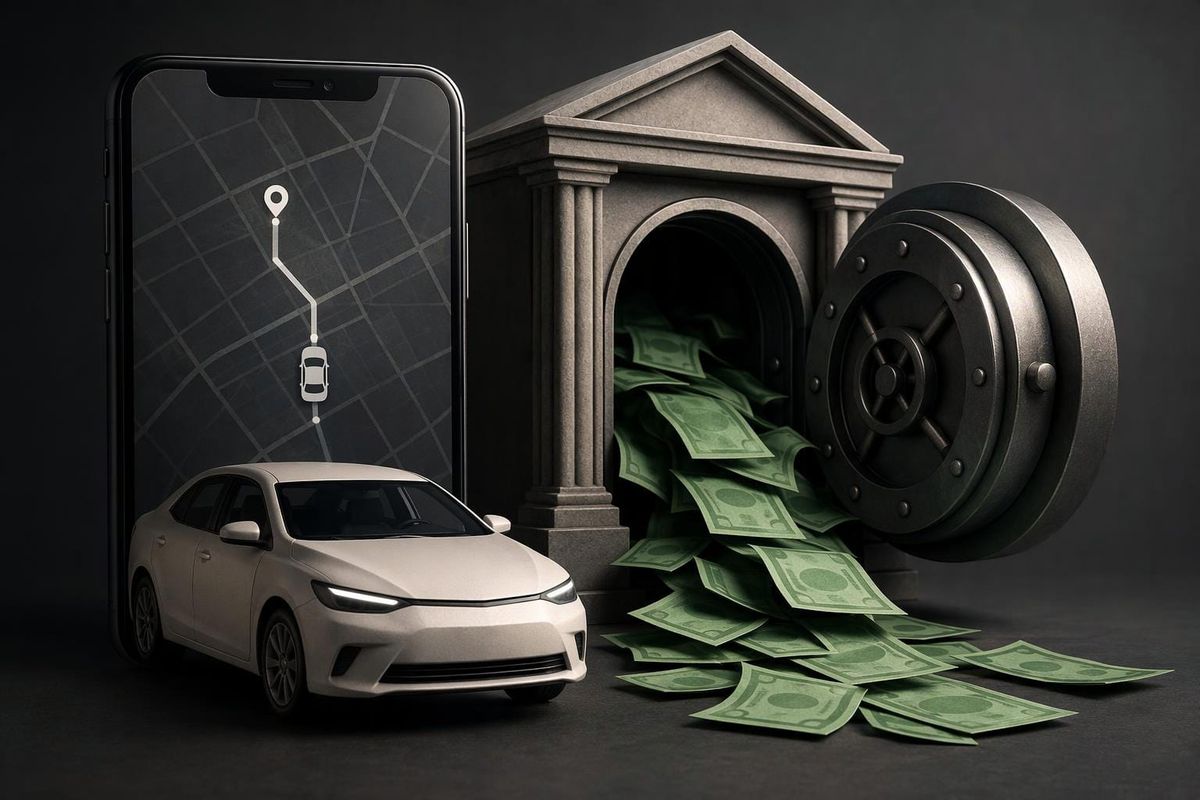
Lyft, whose app connects riders with drivers, swung to a $9.7 million loss in the third quarter from a $46.1 million profit a year earlier, according to its Thursday SEC filing. The results included a $117.9 million hit from legal, tax and regulatory reserve adjustments and settlements, even as rides and bookings reached records.
Record Rides, A Revenue Reduction
Lyft handled 273.5 million rides during the quarter, while active riders reached 31.6 million. Both rose 10% from a year earlier; rider growth stayed in double digits for the eighth consecutive quarter.
Transaction value, or gross bookings, reached $5.6 billion, a 17% year-over-year increase. That measure includes taxes, tolls and fees, but leaves out driver tips. Lyft said North American ride growth accelerated compared with the prior quarter's year-over-year pace, with gains in both the U.S. and Canada, and Lyft Urban Solutions had a record quarter.
Revenue grew 8% from a year earlier to $1.8 billion. Legal, tax and regulatory items reduced that figure by $69.1 million; excluding the reduction, revenue was $1.9 billion.
LYFT shares fell about 4% to $17.11 in Friday trading.
Adjusted Earnings And Cash Grew
Adjusted earnings before interest, taxes, depreciation and amortization rose 47% year over year to $203.9 million, versus $138.9 million. That measure excludes the reserve adjustments and settlements, as well as expenses such as stock-based pay and acquisition-related costs. Its margin, measured against bookings, increased to 3.6% from 2.9%.
Quarterly operating cash flow reached $328.4 million, compared with $291.3 million a year earlier. Free cash flow—operating cash flow less purchases of property, equipment and scooters—was $294.7 million, versus $277.8 million. Over the trailing twelve months, Lyft generated $1.2 billion in operating cash flow and $1.1 billion in free cash flow.
For the fourth quarter, Lyft forecasts bookings of approximately $5.74 billion to $5.94 billion, representing approximately 13% to 17% year-over-year growth. Management expects adjusted earnings before interest, taxes, depreciation and amortization of approximately $188 million to $213 million, up approximately 22% to 38%, with a bookings-based margin of approximately 3.3% to 3.6%.
Memberships, Chauffeurs And Driverless Rides
Ridesharing supplies substantially all of Lyft's revenue through driver service fees and commissions. Its wider transportation business includes taxis, chauffeur services, car sharing, bikes and scooters. The company bought European taxi app Freenow and TBR Global Chauffeuring in 2025 and operates across thousands of cities on six continents.
Lyft announced its U.S. membership program, Lyft Go, offering members up to 8% back on each ride in Lyft Credits. The company also reported a record number of North American rideshare trips connected to partnerships.
The autonomous-vehicle business already has an operating foothold in Nashville. Lyft began connecting app users with fully autonomous Waymo vehicles in September and held a ribbon-cutting for its 80,000-square-foot depot in October.
Lyft CEO David Risher said in the earnings statement, “Looking ahead, our AV partnerships are preparing us to be the best hybrid operator in the business.” He was referring to autonomous vehicles.
Alcove, Lyft's dedicated premium chauffeur brand for corporate travel programs, is scheduled to launch in early 2027.
Sources
- 8-K Filing — Lyft, Inc. (LYFT) — SEC EDGAR
- Exhibit lyft-20260930xpressrelease.htm — Lyft, Inc. 8-K exhibit — SEC EDGAR
- What Lyft (LYFT) Said on Its Q3 Earnings Call — Yahoo Finance
- Lyft Inc (LYFT) Q3 2026 Earnings Call Highlights: Record Bookings, Surging EBITDA and a ... — Yahoo Finance
- Lyft continues to break records, but growth showing signs of slowing (LYFT:NASDAQ) | Seeking Alpha — seekingalpha.com
- Lyft Reports Strong Q3 2026 Results — businesswire.com