IPO Lockup Period Meaning: What Insiders Can Sell, When, And Where To See It
A lockup bars insiders from selling after an IPO for a set time. Here is how to find the terms, what changes at expiration, and how later sales show up in filings.


What an IPO lockup period means
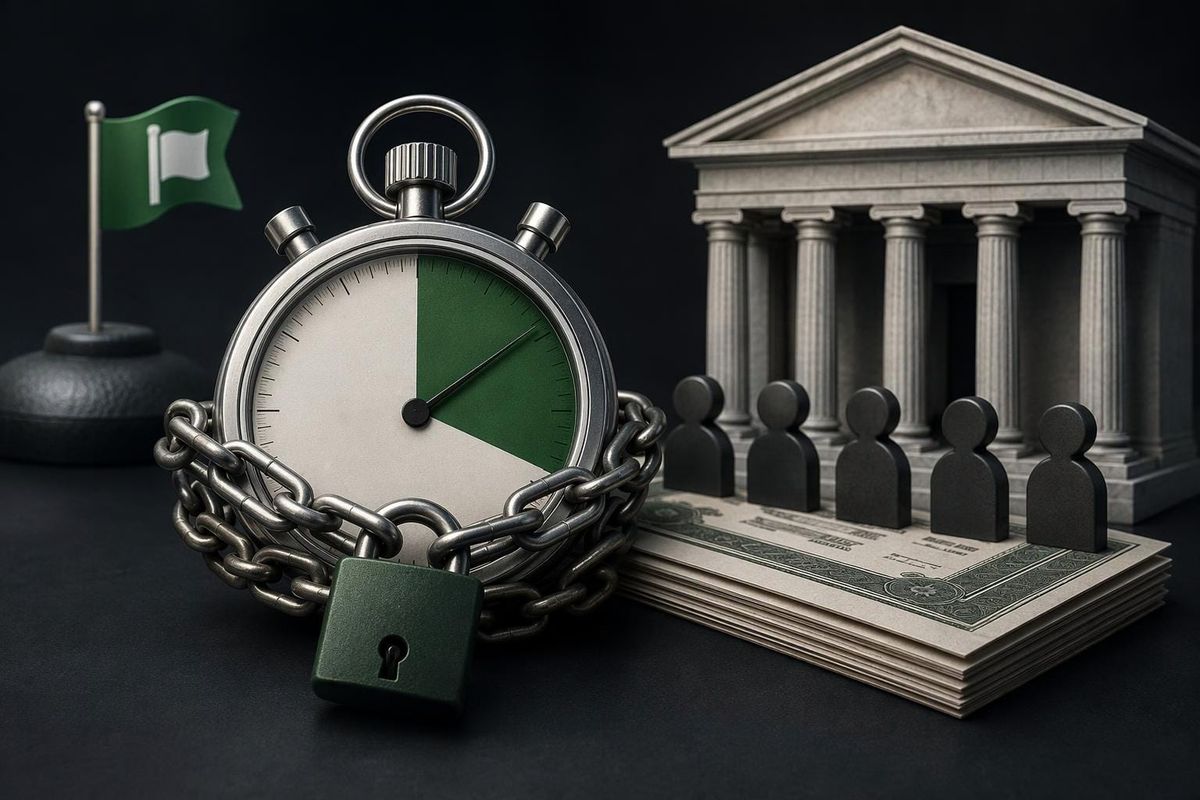
A lockup period is a stretch of time after an initial public offering (IPO) when insiders agree not to sell their shares. Insiders include employees, their friends and family, and large shareholders. Their shares are "locked up" until the period ends. The company and its underwriter typically arrange this before the offering, so insider shares do not reach the public market too soon.
The Investor.gov lockup page explains that a company using a lockup must disclose its terms in its registration documents, including the prospectus. The same page notes that a stock price may fall in anticipation of locked-up shares being sold when the lockup ends.
How long lockups last
Terms differ from deal to deal, but Investor.gov says most lockups prevent insiders from selling for 180 days. Some also cap the number of shares that can be sold over a designated period. So "expired" does not always mean "everyone can sell everything."
To check, open the IPO prospectus through EDGAR full-text search and look for the lockup or "shares eligible for future sale" language. That is where the length, the covered holders and any exceptions are written down.
Early releases and staged expirations
Because lockup terms are set by contract and vary, the prospectus is the place to see whether a deal has anything other than one simple end date, such as limits on the number of shares sold in a period. Read it for the specific wording rather than assuming a single cliff. Companies that report a material event can also describe it in an 8-K, the report public companies file between quarterly reports; the SEC's Form 8-K instructions show what that form covers.
Can former employees sell during a lockup
Investor.gov describes lockups as covering company insiders, including employees, their friends and family, and large shareholders. Whether a particular former employee is bound depends on the agreement they signed, so check the prospectus and any equity paperwork you hold. Your own situation, including taxes, decides what is sensible, so use official sources for that.
How holder sales appear in filings
After a lockup ends, big holders' sales show up in public filings. Two Bullished examples show the pattern.
A controlling holder's sales can be spread across many days. Grindr's controlling holder, Raymond Zage III, sold 2,000,000 shares under a trading plan from September 16 to November 3. He still owns 53.8% of the company, which shows that a large sale can leave a holder in control.
Some disclosures describe settlements rather than open-market sales. Cipher Digital's largest holder group delivered 3.6 million shares to a dealer under forward contracts: 1,805,000 shares from V3 Holding and 1,840,000 from Bitfury Top HoldCo. The two still report 51,026,694 shares, or 11.2% of the company, in ownership-filing amendments. Read the contract type before you call a transfer a sale on the market.
Example: a controlling holder selling into a slide
In the Grindr case, prices fell from $15.62 on September 16, when 333,600 shares sold, to $12.78 on November 2, when 330,000 went. On November 3, 170,000 sold at $13.03. The largest single tranche was 350,000 shares, all sold at $14.228 on one October day.
The lesson is about reading, not predicting: a sale pattern and a falling price sit side by side in the filings, but the filings do not say one caused the other. Zage's holding now stands at 93,439,583 shares against 173,820,627 shares outstanding. Check the percentage against the share count in the filing.
Lockup versus a follow-on offering
A lockup expiring lets existing holders sell. A follow-on offering is the company itself, or sometimes holders, selling new shares through underwriters. They are different events and the supply effect is different.
Rapport Therapeutics priced a $200.0 million stock offering at $21.00 a share, a 23.7% discount to the $27.54 last reported price. The public offering covers 8,333,334 common shares, and an option for up to 1,190,476 shares would bring the total to 9,761,905 shares and the offering to about $230.0 million. The underwriting discount is $1.26 a share, about $12.0 million in all. That is a company raising money, not a lockup ending.
Frequently asked questions
What is an IPO lockup period?
It is a set time after an IPO when insiders, such as employees and large shareholders, agree not to sell their shares. Most last 180 days, though terms vary.
Can former employees sell during a lockup?
It depends on the agreement. Investor.gov says lockups cover insiders including employees, so check the prospectus and the paperwork you signed.
Do stocks fall at lockup expiration?
Not necessarily. Investor.gov says a price may drop in anticipation of locked-up shares being sold, but that is a possibility, not a rule.
How this analysis was done
This guide uses the Investor.gov explanation of lockup agreements and three Bullished stories on filings from Grindr, Cipher Digital and Rapport Therapeutics. Figures are reported as those stories give them. It is a walk-through of how disclosures look, not a statistical study of stock moves after lockups.
Sources
- Initial Public Offerings: Lockup Agreements | Investor.gov — investor.gov
- EDGAR full-text search — U.S. Securities and Exchange Commission
- Form 8-K: General instructions — U.S. Securities and Exchange Commission
- Grindr's Controlling Holder Sold 2 Million Shares As Price Slid From $15.62 To $12.78 — Bullished
- Cipher Digital's Biggest Holder Group Delivers 3.6 Million Shares To A Dealer In Forward Settlements — Bullished
- Rapport Therapeutics Prices $200 Million Share Sale At $21, Below Tuesday's $27.54 Price — Bullished
Bullished Learn guides explain how filings and markets work. They are education, not investment advice: nothing here is a recommendation to buy or sell any security.