Indie Semiconductor Keeps Robot And Drone Wins Out Of Its $6.2 Billion Backlog
CEO Donald McClymont calls the exclusion conservative, citing more than 40 vision design wins in 2026 and 2027 revenue in line with estimates.


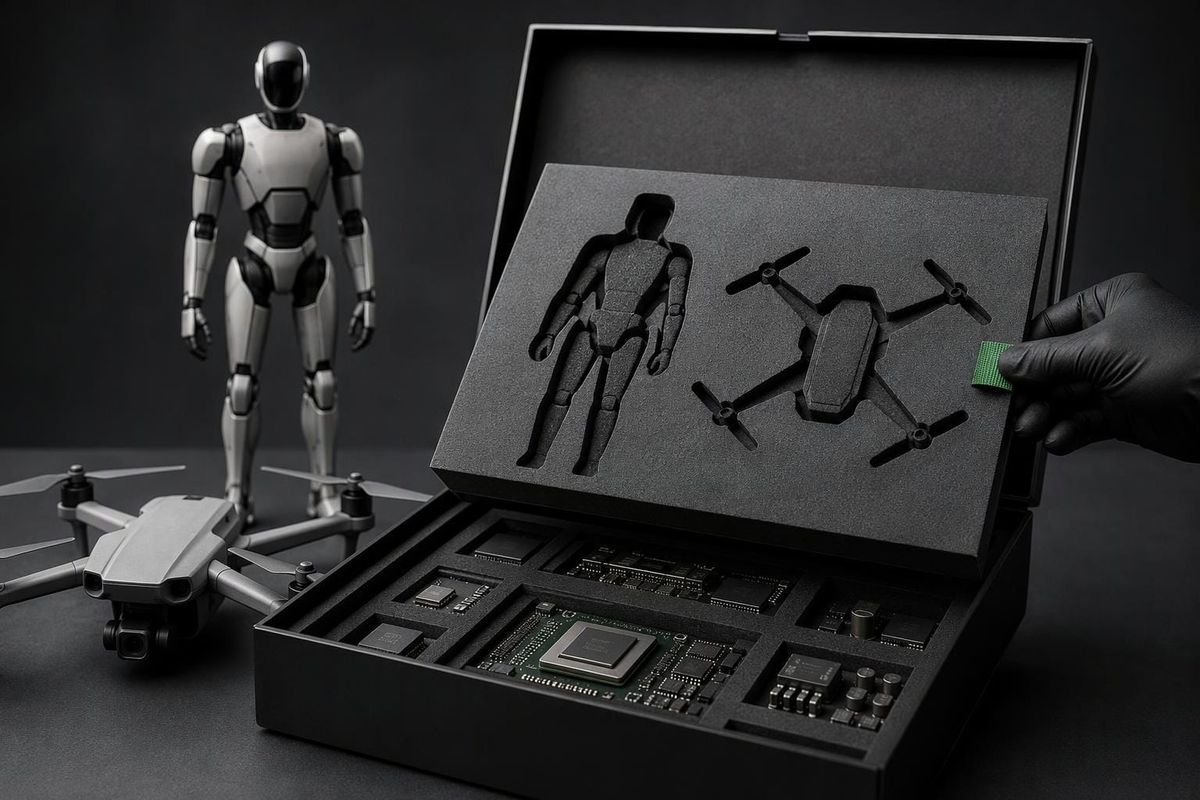
Indie Semiconductor, which designs chips and software for cars, left its humanoid-robot and drone design wins out of a strategic backlog that "trended slightly up" to $6.2 billion, CEO Donald McClymont said on the company's third-quarter earnings call Thursday. The figure excludes the China Wuxi business.
Why physical AI is outside the number
McClymont called the exclusion "a conservative approach," saying "today is just too early to predict for the precision, the size, the initial ramp, and the winners" in physical AI. The company's vision portfolio alone has won more than 40 designs in 2026 across drones and humanoid robots, he said.
He named Agibot, Unitree and Figure AI among humanoid-robot customers. He said discussions under way could significantly raise the backlog when it is next reviewed. A substantial percentage of the 2027 research budget, he said, will be redirected to customizing next-generation chips for this market.
Indie says its automotive technology transfers to robots, with estimated content of more than $100 on some humanoid platforms.
A flat backlog, explained
Asked by an analyst how the backlog is calculated, McClymont said the method has not changed apart from the physical AI exclusion. The model uses a rolling 10-year window, so designs that ramped in the past year or so roll off, and some follow-on designs have not yet been won.
The near-flat reading, he said, is not "indicative of how we see our momentum." The company expects to add multiple hundred million dollars of annual run rate over the next couple of years.
Based on current visibility, he said, 2027 revenue is in line with current analyst estimates. He added that organic growth in radar and vision should more than replace the Wuxi revenue that drops away in 2027 once that unit is sold.
Radar volumes and the Wuxi sale
Third-quarter revenue was $70.2 million, up 31% from a year earlier and 10% from the prior quarter, CFO Naixi Wu said. The non-GAAP operating loss narrowed to $7.2 million from $11.3 million a year earlier. Fourth-quarter revenue is guided to $73 million to $81 million.
McClymont told an analyst from Roth Capital that the automotive radar chipset, now in high-volume production, should reach 50 to 70 million units a year at an average selling price of $5 to $6.
The $135 million gross-proceeds sale of the Wuxi unit to a publicly listed Chinese company remains under review by Chinese regulators, Wu said, and the company is optimistic it can close by the end of the year. Wuxi revenue was $29.5 million in the quarter. The company also expects its AMS Osram image-sensor acquisition to close at year-end.
Wu said the company expects to reach non-GAAP profitability in the second quarter of 2027 and turn cash-flow positive the following quarter.
Sources
- Indie Semiconductor Q3 2026 Earnings Call Transcript — benzinga.com
- indie Semiconductor, Inc. (INDI) Reports Q3 Loss, Beats Revenue Estimates — Yahoo Finance
- What Investors Got Wrong About indie Semiconductor Before A 69% Slide — Yahoo Finance
- indie Semiconductor, Inc. (INDI) Seasonal Returns Chart - Yahoo Finance — Yahoo Finance
- GlobalFoundries Inc. (GFS) Q3 Earnings and Revenues Beat Estimates — Yahoo Finance