IFF Says Costs Will Outrun Its Pricing In The Fourth Quarter, With The Widest Gap In Early 2027
The CFO said price-versus-cost turns unfavorable in the fourth quarter, with the biggest gap in the first quarter, and health is the weak spot.


IFF Chief Financial Officer Michael DeVeau told analysts on the company's third-quarter earnings call on Wednesday that pricing will lag rising input costs in the fourth quarter, with "the biggest gap in Q1" before it narrows through 2027. The company still raised the low end of its full-year guidance, to sales of about $7.5 billion to $7.6 billion and adjusted operating EBITDA of $1.55 billion to $1.6 billion.
A price-cost gap that peaks in the first quarter
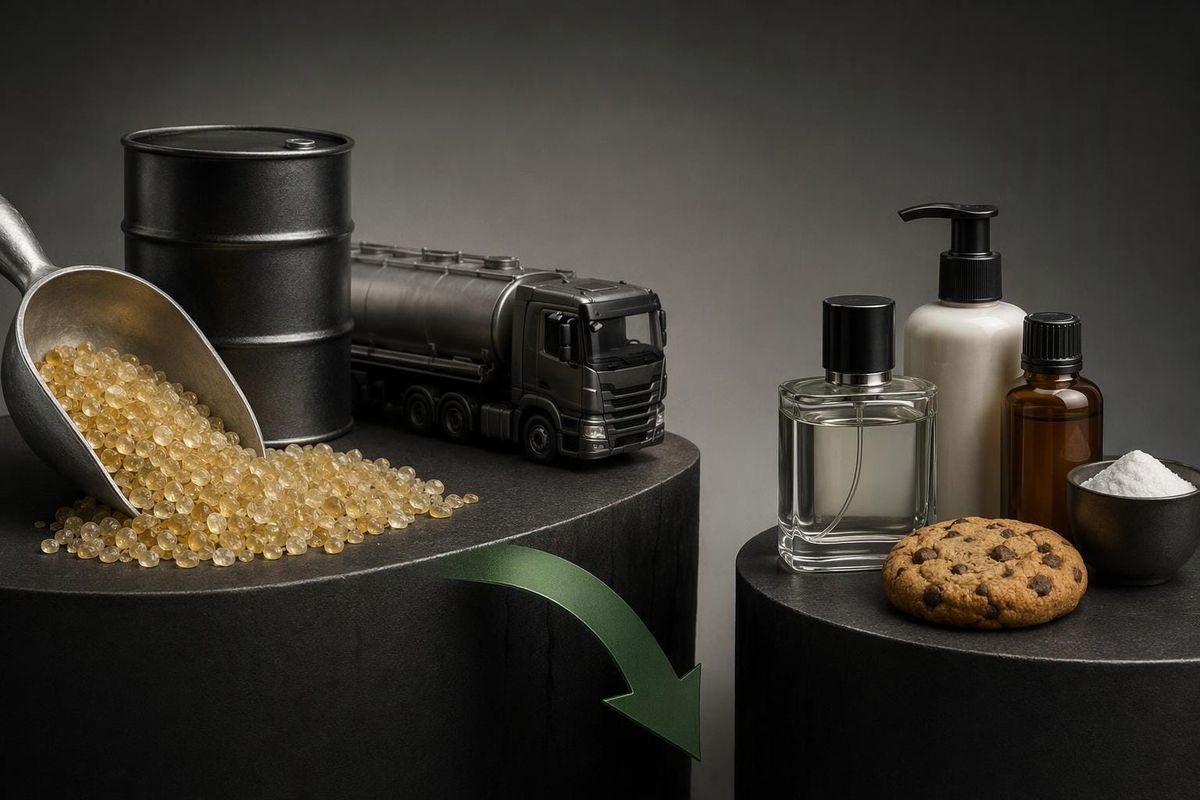
IFF makes flavors, fragrances and ingredients for food, beverage, household and personal care makers. DeVeau said the biggest cost increases come from oil derivatives, including energy and logistics, and show up across all three continuing businesses.
Asked by a Baird analyst when pricing reaches parity with costs, DeVeau said customer price talks are under way and will continue into December. He expects improvement each quarter through 2027 and said the company should "flip to a positive number" going forward, helped by procurement productivity.
A BNP Paribas analyst asked whether a 3% raw-material inflation figure for 2027 resonated. DeVeau said "that 3%-ish number" feels right and matches current trends, partly reflecting higher Brent crude prices.
Health and biosciences drags the fourth quarter
The company expects fourth-quarter margin to ease from the third quarter, partly on seasonality. Health and biosciences is the pressure point. DeVeau told a Wells Fargo analyst that three things weigh on it: softer health volume, unfavorable price to input cost from logistics and energy, and the timing of research and commercial reinvestment. Raw materials, he said, are "pretty benign."
CEO Erik Fyrwald blamed US and European consumers for cutting dietary supplement spending. He pointed to a new product launch, but said "the market is very soft."
Third-quarter revenue was just under $2 billion, up roughly 5% on a comparable currency-neutral basis. EBITDA was $403 million, up 6%. Health and biosciences sales rose 1% to $566 million, while taste and scent each grew 6%.
Food ingredients sale and $100 million in stranded costs
IFF agreed to sell its food ingredients business to CBC Capital Partners for about $4.3 billion and says it is on track to close by the end of the first half of 2027. Fyrwald also said the company completed a $500 million accelerated share repurchase and does not plan more buybacks in the fourth quarter.
A Jefferies analyst asked about roughly $100 million of stranded costs, the overhead left behind after the sale. DeVeau said IFF aims to eliminate about two-thirds within 12 months of closing, through contract renegotiations, shifting work to its shared services unit, technology and reshaping the organization.
Pricing talks that run into December will show how much of the gap IFF can recover, with DeVeau pointing to the first quarter of 2027 as the low point.
Sources
- International Flavors & Fragrances Adjusts Sales Outlook, Warns of Softer Profit — MarketWatch
- International Flavors & Fragrances as rising costs cloud outlook (IFF:NYSE) | Seeking Alpha — seekingalpha.com
- International Flavors (IFF) Q3 Earnings: Taking a Look at Key Metrics Versus Estimates — Yahoo Finance
- International Flavors (IFF) Surpasses Q3 Earnings and Revenue Estimates — Yahoo Finance
- International Flavors: Q3 Earnings Snapshot — Associated Press