Delcath's HEPZATO Treatment Volume Grows About 72% As Quarterly Profit Reaches $7 Million
The liver-cancer treatment company raised its 2026 sales outlook to $115 million–$117 million while spending more on trials and expansion.


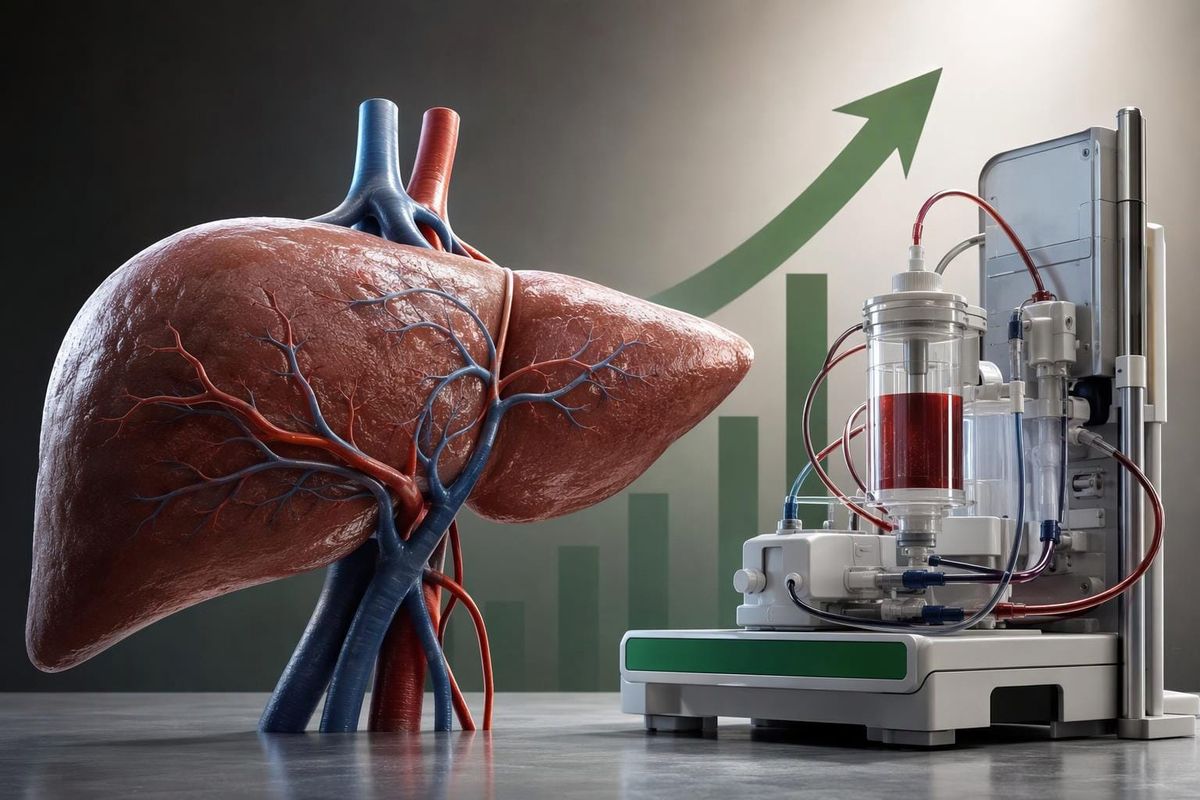
Delcath Systems, which sells treatments for cancers in the liver, increased HEPZATO treatment volume by approximately 72% from a year earlier in the third quarter, while net income reached $7.0 million, up from $0.8 million. The company raised its annual revenue outlook Monday alongside results published with an SEC filing.
HEPZATO Drives The Sales Increase
Delcath now expects 2026 revenue of $115 million–$117 million and HEPZATO KIT treatment volume at least 41% above 2025. Management also expects to retain 87%–89% of sales after product costs and deliver positive adjusted earnings before interest, taxes and depreciation.
Third-quarter revenue totaled $35.1 million, against $20.6 million a year earlier. U.S. HEPZATO sales accounted for $32.7 million, up from $19.3 million; European CHEMOSAT sales contributed $2.4 million, against $1.3 million.
The company has 33 active treatment centers. HEPZATO KIT combines melphalan, a chemotherapy drug, with a delivery system that separates blood flowing from the liver and filters it during treatment. In Europe, Delcath sells the device alone under the CHEMOSAT name.
The FDA approved HEPZATO on August 14, 2023, for adults with uveal melanoma that has spread to the liver. Its approved use covers patients whose inoperable liver metastases affect less than 50% of the liver, with either no cancer outside the liver or limited disease elsewhere that can be treated with surgery or radiation. Centers must complete required training to provide treatment.
Profit Rises Alongside Development Spending
Delcath retained 89% of quarterly revenue after product costs, versus 87% a year earlier. Operating income reached $7.116 million, compared with an operating loss of $388,000, and diluted earnings rose to $0.17 a share from $0.02.
Research and development costs increased to $11.0 million from $8.0 million, which Delcath attributed primarily to clinical hiring and more trial activity. Commercial expansion was the main reason selling and administrative costs rose to $13.1 million from $10.3 million.
Quarterly adjusted earnings before interest, taxes and depreciation reached $11.5 million, against $5.3 million. That measure excludes stock-based pay, among other adjustments; for the first nine months, it was $22.463 million, compared with $22.659 million a year earlier.
Operations generated $8.2 million in cash during the quarter, up from $4.8 million. Delcath held $104.3 million in cash and investments on September 30, 2026, and had no debt.
Trials Extend Beyond Uveal Melanoma
Delcath is testing HEPZATO in a mid-stage study of HER2-negative metastatic breast cancer concentrated in the liver. The first patient received treatment on July 9, 2026, at the European Institute of Oncology in Milan, Italy.
The randomized study plans to enroll approximately 90 patients across more than 20 U.S. and European sites. It compares HEPZATO combined with standard treatment against standard treatment alone.
Gerard Michel, chief executive officer of Delcath Systems, said the pipeline includes “a planned IND submission for cholangiocarcinoma in early 2027”—an application to begin clinical testing for bile-duct cancer.
Michel also said Delcath plans to complete preclinical development of an oxaliplatin-based liver-perfusion product by mid-2027, pending FDA agreement.
Sources
- 8-K Filing — DELCATH SYSTEMS, INC. (DCTH) — SEC EDGAR
- Exhibit dcth-q32026erex991.htm — DELCATH SYSTEMS, INC. 8-K exhibit — SEC EDGAR