D-Wave Wants To Sell Quantum Computers As Services Revenue Rises 318%
Customer-built applications suit management's model, even as lower-margin development work helps drive revenue growth.


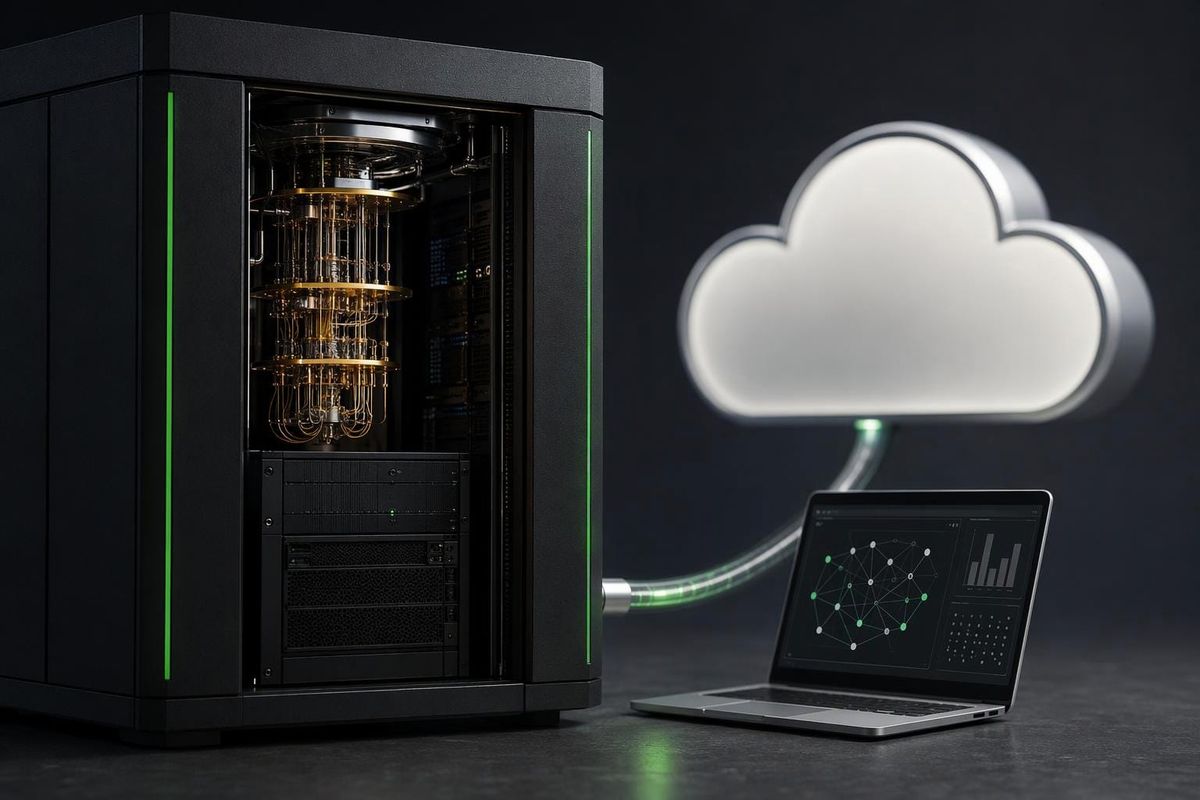
D-Wave Quantum, which builds quantum computers and the software and cloud services to use them, wants to sell computing rather than become a large application-development business, Chief Executive Officer Dr. Alan Baratz said on the company's earnings call Tuesday. Professional-services revenue nevertheless rose 318% to $2 million in the third quarter—a $1.5 million increase from a year earlier, according to its results release.
Services Grow, Margins Shrink
Total third-quarter revenue reached $4.5 million, up 21% from a year earlier. Cloud-computing subscriptions contributed $2.2 million, up 56%, while system sales revenue fell by $1.5 million.
Acting Chief Financial Officer Greg Golkov said on the call that a bigger share of lower-margin professional services primarily explained the pressure on gross profit and margins. Gross profit fell 11% to $2.4 million, with a 52.9% gross margin; adjusted gross margin was 63.6%.
Golkov attributed services growth chiefly to a substantial Fortune 100 engagement and paid gate-model computing research. Baratz recalled discussing the two-year, $10 million enterprise agreement in the first quarter: its first application is in production, and he expects other applications under development to follow.
D-Wave's QBTS shares had lost about 56% since the year's start as of Tuesday's original report. Its market value was $4.4 billion as of 9:16 a.m. ET Tuesday.
NTT DOCOMO Builds Its Own
NTT DOCOMO developed both of its production applications itself, Baratz said in response to an analyst's question. D-Wave had discussions with the customer that he thought may have helped, but he welcomed its ability to do the development work independently.
"We don't really want to be a large PS company," Baratz said, referring to professional services. "We want to sell systems. We want to sell quantum compute as a service."
The applications run less often than daily or weekly, Baratz said, while still helping the mobile operator's operations. Its second application cut peak daily location-registration signals by 65.3% and paging signals by 7.0%. A representative optimization covering 333 base stations took approximately five minutes.
D-Wave sells systems for customers' premises and access through its Leap cloud service. Its annealing computers address optimization tasks such as scheduling; it is also developing gate-model computers. Services help customers identify useful problems and build applications, but Baratz wants customers or outside partners to take on that work wherever possible.
Partners And Systems Carry The Plan
CGI plans to add D-Wave's platforms to its technology-services portfolio, helping clients build and deploy applications in areas including logistics, transportation and retail. LG CNS signed a memorandum of understanding focused on enterprise optimization in South Korea and beyond, aiming to move applications into production.
Baratz expects partnerships to start contributing in 2027. He also expects growth in systems, cloud computing and professional services, with larger system deals potentially accounting for more bookings and revenue.
Third-quarter bookings—customer orders expected to become revenue—fell 19% to $1.9 million. For the first nine months, they rose 611% to $37.4 million, including a $20 million Florida Atlantic University system sale. Golkov expects delivery and recognition of a substantial portion of that sale's revenue in the fourth quarter, with installation revenue likely in early 2027.
Contracted work awaiting revenue recognition totaled $38.3 million, versus $2.9 million a year earlier. D-Wave expects to recognize 59% within 12 months of September 30, 2026, and 71% within 24 months.
The Commerce Department agreement gives D-Wave access to up to $100 million in funding tied to milestones for next-generation annealing and gate-model computers. Golkov said none had been received by the third quarter's end.
The Florida Atlantic University delivery is a concrete test of the sales model Baratz favors: a large system order becoming revenue, rather than development work alone.
Sources
- D-Wave Quantum results release (Form 8-K, EX-99.1) — SEC EDGAR
- D-Wave Quantum Earnings Miss As Bookings Boom | Investor's Business Daily — investors.com
- D-Wave Quantum falls amid mixed Q3 results, weak bookings (QBTS:NASDAQ) | Seeking Alpha — seekingalpha.com
- D-Wave Quantum Inc. (QBTS) Reports Q3 Loss, Beats Revenue Estimates — Yahoo Finance
- Earnings Snapshot: D-Wave Quantum posts mixed Q3: Revenue beats estimates, EPS misses, bookings fall 19% | Seeking Alpha — seekingalpha.com
- D-Wave Quantum GAAP EPS of -$0.13 misses by $0.01, revenue of $4.51M beats by $0.17M (QBTS:NASDAQ) — seekingalpha.com