CSX CEO Steve Angel Will Have Both Operations Heads Report Directly To Him After Mike Corey's Retirement
Angel called himself an "operating CEO" on the third-quarter call, as earnings per share rose 30% on 5% volume growth.


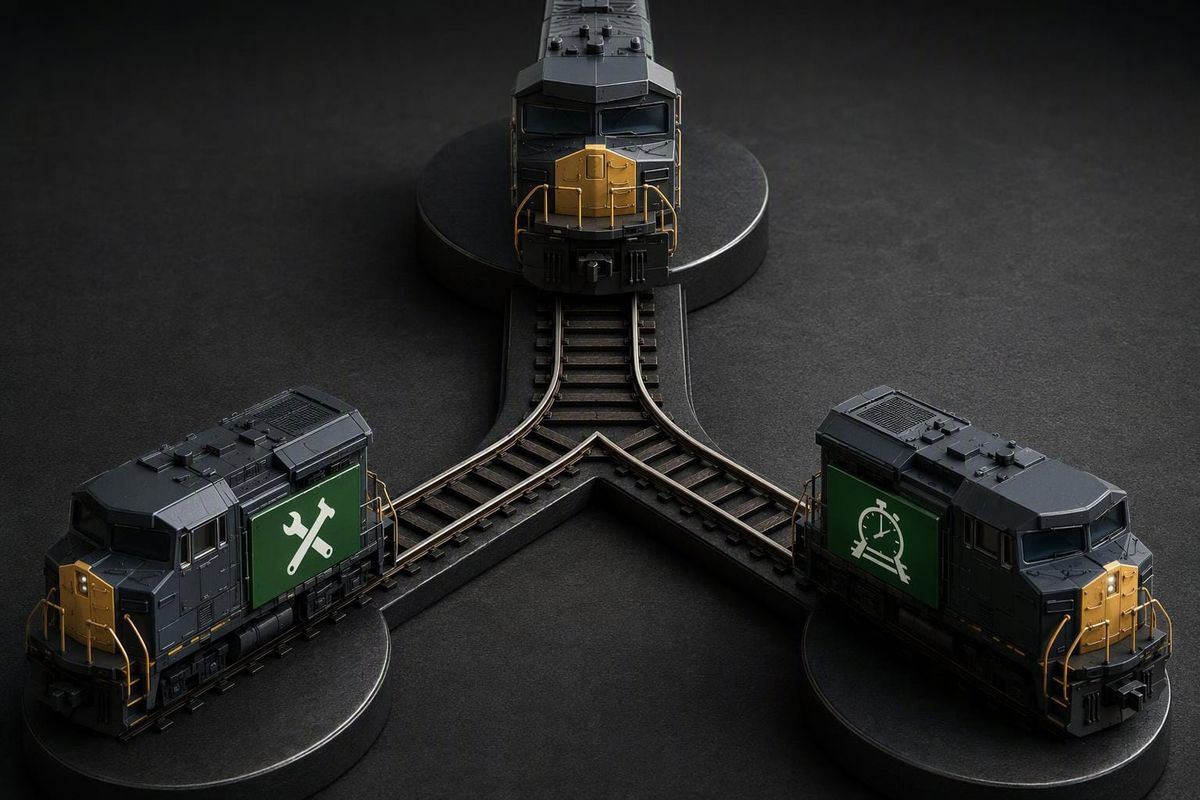
CSX Chief Executive Steve Angel said on the railroad's third-quarter earnings call that the two executives who run its operations will now report straight to him, after the retirement of Mike Corey. Earnings of 57 cents per share rose 30% from last year's adjusted result, Angel told listeners.
Who reports to whom
Angel, the company's president and chief executive, said Casey Albright has been in charge of network operations and service design. Doug Ryarchuk has run engineering, mechanical and transportation. Both will keep doing that work, he said: "They're just going to report directly into me."
A JPMorgan analyst had asked whether this amounted to a dual chief-operating-officer role, and whether CSX was running an outside search. Angel's answer covered the reporting lines; he did not mention a search.
He leaned into the job: "most people think of me as an operating CEO, and that's what I like to do." He said he ran manufacturing operations for GE early in his career. He also said, "I'm not a lifelong railroader like a lot of people."
He described Albright as a 30-year CSX veteran who started in dispatch, and Ryarchuk as having had four decades at CN. In his prepared remarks, Angel said Corey announced his retirement after a 45-year career and thanked him for building a deep bench of operations leaders.
The quarter behind the change
Angel said volume grew 5% and operating margin improved to 39.1%, which he put at 420 basis points above last year's adjusted result. Chief Financial Officer Kevin Boone said revenue rose 12% and non-fuel costs fell 3%.
Service metrics were mixed. Angel said velocity, dwell and customer-switch data improved from the second quarter, and carload trip plan compliance improved modestly. Intermodal trip plan compliance declined. In October, he said, velocity averaged more than 19 miles per hour and dwell was approaching 10 hours.
Atlanta came up as a pressure point. Chief Commercial Officer Maryclare Kenney said profitable volume growth there had led to temporary service tightness. Angel said Atlanta volume is up 50% over three years and that CSX is investing in track to raise switching and processing capacity by 50%.
On volume more broadly, Angel said "we feel very confident we can handle the volume," and that CSX is adding a modest number of train and engine employees.
Separately, FreightWaves reported that CSX eliminated 109 operations management positions.
Guidance and what comes next
Angel said CSX now expects revenue growth in the high single digits, up from a mid-to-high single-digit range. Other targets are unchanged: margin expansion above 350 basis points, capital spending below $2.4 billion and free cash flow growth above 80%.
Boone said he expects fourth-quarter margin improvement of more than 350 basis points year over year.
Angel told analysts CSX has a little over 100 productivity initiatives feeding its 2027 plan, and that he does not expect 2027 productivity gains to be as big as this year's.
Sources
- CSX Logs Higher 3Q Profit, Revenue on Rising Freight Volumes — MarketWatch
- CSX Q3 EPS $0.57 Beats $0.53 Estimate, Sales ... — benzinga.com
- CSX eliminates more than 100 management positions - FreightWaves — freightwaves.com
- CSX Uses Drones to Enhance Railcar Inspections at Curtis Bay Terminal - Railway Age — railwayage.com
- CSX Stock And North American Rail Shares Facing A Diesel Margin Test — Yahoo Finance