Corbus Expects $115.3 Million To Fund Operations Into 2028 As Cancer Trials Advance
A $15 million licensing milestone drove most of the increase in quarterly expenses, while obesity data are due November 15.


Corbus Pharmaceuticals, which is testing cancer treatments and an obesity pill, expects its $115.3 million in cash and investments at September 30 to fund operations into 2028, according to Tuesday's SEC filing. That estimate rests on its current spending plans, with cancer testing now in a late-stage trial.
A $15 Million Licensing Bill
Corbus spent approximately $38.8 million on operations in the third quarter, up $14.4 million from $24.4 million a year earlier. It attributed the increase primarily to a $15 million milestone incurred under its cancer-drug license with CSPC.
Research and development expenses reached $34.2 million, compared with $20.9 million a year earlier. Administrative expenses rose to $4.6 million from $3.6 million.
The quarterly net loss widened to approximately $37.8 million from $23.3 million, but the loss per share narrowed to $1.81 from $1.90. The average share count used in that calculation was 20,837,787, versus 12,307,298 a year earlier.
For the first nine months, research spending totaled $85.2 million, versus $51.7 million in the comparable 2025 period. The nine-month net loss was $95.8 million, compared with $58.0 million.
Cancer Testing Moves Toward Approval
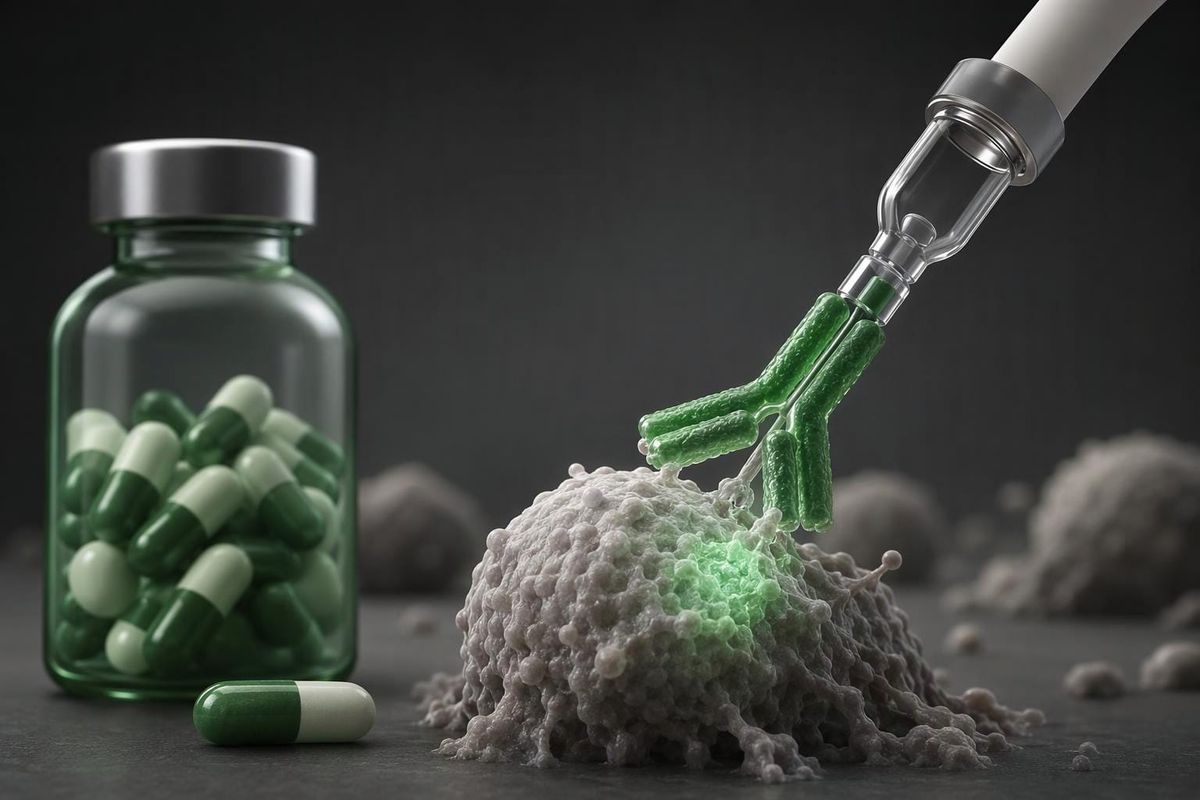
Corbus has no approved products. Its cancer candidate, sutantatug envedotin, also called CRB-701, uses an antibody to target the Nectin-4 protein on cancer cells and deliver a cell-killing payload. The company licenses it from CSPC and relies on contract manufacturers and licensing partners for supplies.
The FDA cleared its late-stage oropharyngeal cancer study in July, and dosing began in September. Corbus CEO Yuval Cohen called the trial's start “our transition to late-stage clinical development.”
The study is designed to enroll 250 patients with previously treated oropharyngeal cancer. It compares the candidate with doctors' choice of capecitabine, cetuximab or docetaxel. Tumor response is the main measure for potential accelerated approval; overall survival is the main measure for possible full approval.
Corbus expects results in the first quarter of 2027 from testing the drug with Keytruda as an initial treatment for oropharyngeal cancer. Those results could support further trials aimed at approval in that setting. The FDA has also granted Fast Track designations for the candidate in oropharyngeal and cervical cancers.
In August, Corbus appointed Leonardo Viana Nicacio as chief medical officer. His oncology development experience includes contributions to the development and approval of PADCEV and TIVDAK.
Obesity Pill Faces Its Next Readout
CRB-913, Corbus's oral obesity candidate, blocks the cannabinoid type-1 receptor. On September 14, the company announced 5% mean weight loss after 12 weeks among participants receiving a daily 60-milligram dose, with no plateau observed.
The early-stage study enrolled 254 adults with obesity but without diabetes at U.S. sites. Participants received 20, 40 or 60 milligrams daily, or a placebo, for 12 weeks, followed by four weeks of safety monitoring. Corbus reported statistically significant weight loss at each dose.
The company described gastrointestinal side effects as fewer and milder than those reported for marketed oral GLP-1 drugs. That assessment came from comparisons across separate trials, rather than a direct test against those medicines.
Corbus plans to discuss the pill's development with the FDA and is evaluating a possible combination with GLP-1 therapy.
Corbus plans to present additional obesity-trial data at ObesityWeek on November 15. The next cancer combination results are expected in the first quarter of 2027.
Sources
- 8-K Filing — Corbus Pharmaceuticals Holdings, Inc. (CRBP) — SEC EDGAR
- Exhibit crbp-ex99_1.htm — Corbus Pharmaceuticals Holdings, Inc. 8-K exhibit — SEC EDGAR
- 8-K filed 2026-09-14 — Corbus Pharmaceuticals Holdings, Inc. (earlier disclosure) — SEC EDGAR