CG Oncology's Experimental Treatment Cuts Bladder Cancer Recurrence Risk By 68% Versus Surveillance
The drugmaker plans two FDA applications in 2027, including a broader initial request covering cancers that did not respond to BCG.


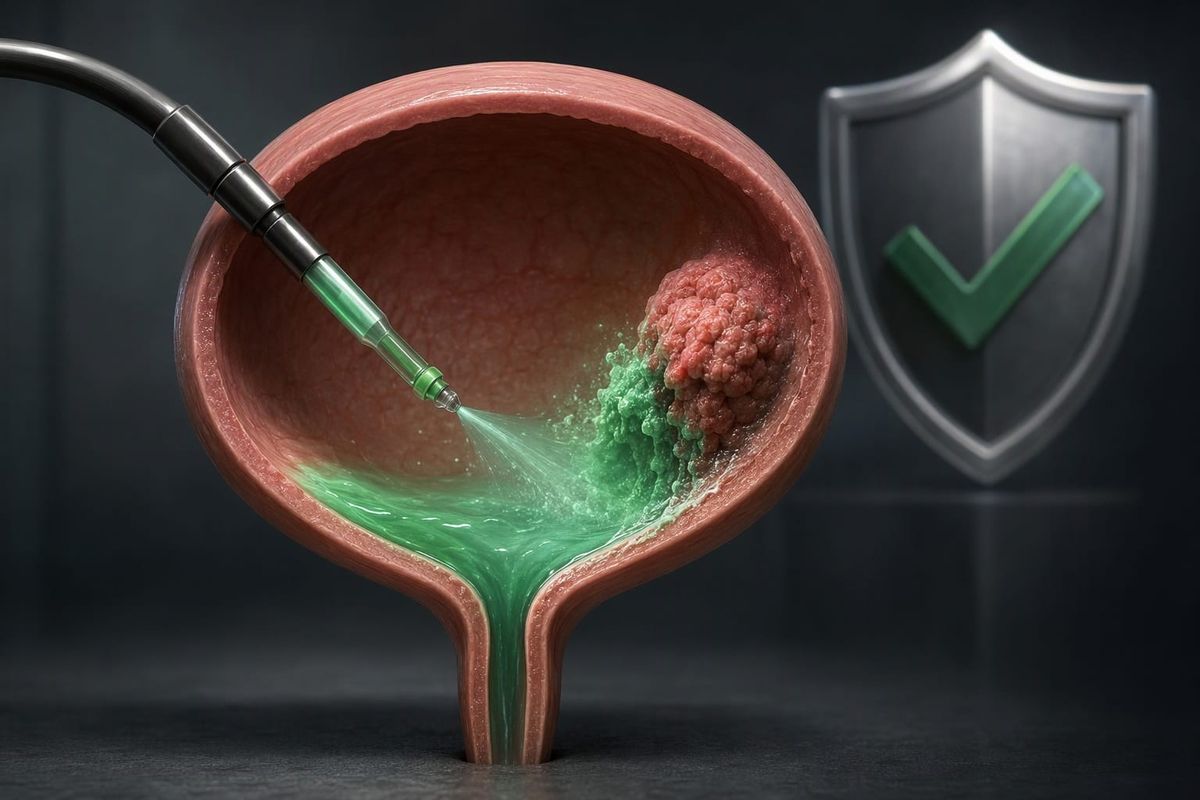
CG Oncology, which develops experimental bladder cancer treatment cretostimogene, reported Monday that the drug lowered recurrence risk by 68% versus surveillance after tumor removal in a late-stage trial. The result, detailed in an SEC filing, supports the company's planned second FDA approval application in 2027.
A Benefit After Tumor Removal
The randomized study, PIVOT-006, tested whether treatment could keep cancer from returning in patients with intermediate-risk disease and high-grade Ta tumors measuring no more than 3 centimeters. These cancers have not spread into the bladder's muscle wall.
Investigators enrolled 367 patients at approximately 90 sites in Canada and the United States. All tumors were removed before patients received either cretostimogene directly into the bladder or surveillance. Median follow-up reached 17 months at the October 26, 2026 data cutoff.
The trial met its main goal, with a statistically significant improvement in time without recurrence. The hazard ratio was 0.32, with a 95% confidence interval of 0.23 to 0.45 and a p-value below 0.0001.
No side effects attributed to treatment were rated Grade 3 or higher—the severe categories—and none caused patients to stop treatment. CG Oncology estimates that the population covers approximately 50,000 patients, for whom no FDA-approved treatment is available after tumor removal.
Two Approval Requests In 2027
CG Oncology started its initial FDA submission in 2025 for cancers unresponsive to BCG, a bladder cancer treatment. That request focused on carcinoma in situ, with or without papillary tumors.
Following FDA feedback, the company plans to add high-grade papillary-only disease to that application. It expects to finish the expanded submission before March 2027 ends, incorporating the additional data.
Arthur Kuan, CG Oncology's chairman, president and chief executive officer, said: “Together, these populations represent the full range of BCG-unresponsive patients, and our goal is a label that reflects that.”
Management plans a second application for intermediate-risk and high-grade Ta disease in the second quarter of 2027. Kuan said manufacturing activities needed to support both applications have been completed.
One Drug Carries The Business
CG Oncology depends entirely on cretostimogene, its only drug candidate. The treatment is designed to destroy cancer cells directly and trigger an immune response against tumors; the company relies on outside manufacturers.
Its development program studies the drug alone and with other cancer medicines in mid-stage and late-stage trials. Cretostimogene has FDA Fast Track and Breakthrough Therapy designations for BCG-unresponsive disease, but remains investigational.
The newly reported findings are preliminary. CG Oncology cautioned that a fuller review could change the results and that the FDA could disagree with its interpretation or approve a narrower use than management seeks.
CG Oncology plans to present the trial's topline findings at the Society of Urologic Oncology Annual Meeting on December 2, 2026.
Sources
- 8-K Filing — CG Oncology, Inc. (CGON) — SEC EDGAR
- Exhibit ck0001991792-ex99_1.htm — CG Oncology, Inc. 8-K exhibit — SEC EDGAR
- Exhibit ck0001991792-ex99_2.htm — CG Oncology, Inc. 8-K exhibit — SEC EDGAR
- CG Oncology’s bladder cancer treatment beats expectations in Phase 3 — endpoints.news
- PIVOT-006 Phase 3 Registrational Trial Demonstrates — globenewswire.com