Casgevy Sales Hit $99 Million, Nearly Six Times Last Year, As CRISPR's Loss Widens To $111.4 Million
CRISPR Therapeutics holds $2,276.6 million in cash and won two FDA fast-track-style designations for its cholesterol-editing drug.


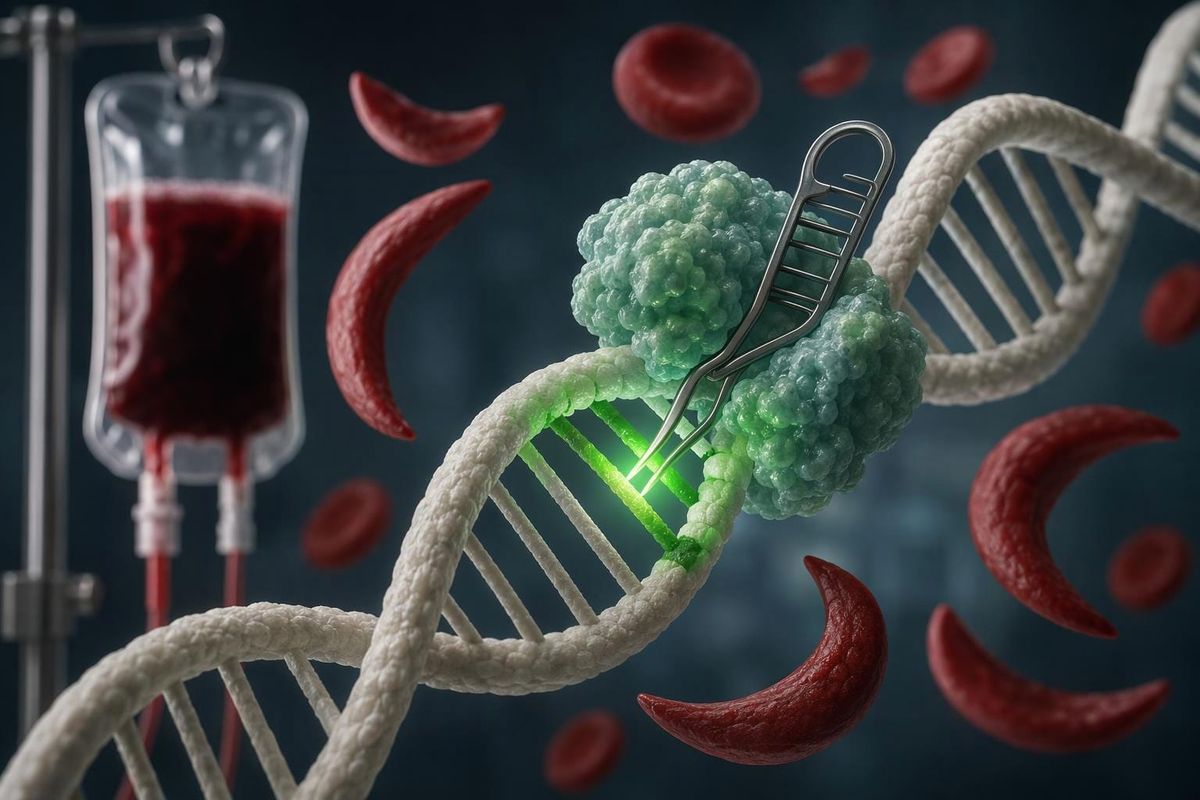
Sales of Casgevy, the sickle cell and beta thalassemia gene therapy CRISPR Therapeutics shares with Vertex, reached $99 million in the third quarter, up 30% from the prior quarter and nearly six times the third quarter of 2025, the company said Monday. CRISPR's own net loss still widened to $111.4 million.
Casgevy demand builds
CRISPR Therapeutics, which develops gene-based medicines using CRISPR/Cas9 gene editing, said more than 750 patients worldwide have started Casgevy treatment. Twice as many began in the first nine months of 2026 as in all of 2025, according to the company's release.
Casgevy is approved in 39 countries for patients 12 and older, with approvals for younger children in five of them. The FDA approved it in July for children 2 and older, and the U.K. cleared it for ages 5 and up. Vertex leads development and sales, and the two companies split profits and program costs 60/40.
That split shows up in CRISPR's books: collaboration expense fell to $41.3 million from $57.1 million a year earlier, which the company attributed to a larger share of Casgevy revenue.
Loss widens despite the revenue
The net loss was $111.4 million, or $1.15 per share, against $106.4 million a year earlier. CRISPR's own total revenue was $12.7 million, including $12.3 million of collaboration revenue.
Research and development spending rose to $71.9 million from $58.9 million, on higher external research costs and sublicense fees. Acquired in-process R&D cost $11.7 million, mainly a development milestone under the Sirius Therapeutics agreement; there was none a year earlier.
Cash, equivalents and marketable securities stood at $2,276.6 million on September 30, versus $1,975.8 million at the end of 2025. Net proceeds of $585.4 million from convertible notes issued in March drove the increase, offset by operating expenses.
Cholesterol editing gets FDA designations
The FDA granted Regenerative Medicine Advanced Therapy designations to CTX310, an in vivo liver-editing drug, for severe hypertriglyceridemia and for elevated LDL cholesterol. The status carries the benefits of Fast Track and Breakthrough designations, including early FDA interactions and potential eligibility for priority review and accelerated approval.
In Phase 1a data presented in August, the highest dose cut mean ANGPTL3 by 79%, triglycerides by 48% and LDL-C by 53% through one year of follow-up, with no treatment-related serious adverse events.
CRISPR also named Sivakesava Sakhamuri, formerly chief technical officer at Orna Therapeutics, as its chief technical officer, effective immediately. A.J. Silver became chief financial officer on October 19, succeeding Raju Prasad, who stepped down to pursue external opportunities.
Phase 1b CTX310 data are due in a late-breaking presentation at the American Heart Association meeting on November 9, a day after zugo-cel systemic sclerosis data at the American College of Rheumatology meeting on November 8.
Sources
- 8-K Filing — CRISPR Therapeutics AG (CRSP) — SEC EDGAR
- Exhibit crsp-ex99_1.htm — CRISPR Therapeutics AG 8-K exhibit — SEC EDGAR
- CRISPR Therapeutics Provides Business Update and Reports — globenewswire.com