Axogen Prostate Study Puts One-Sided Nerve Recovery At 80% Versus About 49% Historically
The small study uses historical comparisons, while hospital and patient surveys test a path to adoption before broad insurance coverage.


Axogen, which sells products for repairing damaged peripheral nerves, reported 80% erectile-function recovery after one-sided prostate nerve reconstruction Monday, compared with about 49% in published historical results. The 38-patient study, presented alongside an SEC filing, supports the company's decision to move forward with a prostate-market launch, but uses historical benchmarks rather than a concurrent control group.
Small Groups, Large Recovery Gaps
The quantitative results covered fewer patients than the full study: 20 with one-sided reconstruction and 10 with reconstruction on both sides. The latter group had 60% recovery, against a 4.9% historical benchmark; the one-sided benchmark was 48.5%. Recovery on this measure required a SHIM erectile-function score of at least 15.
Those historical benchmarks pooled 426 patients for one-sided procedures and 467 for procedures involving both sides. Recovery rates in the underlying historical studies ranged from 33% to 56% and from 1.6% to 13%, respectively. Axogen credited the reconstruction study's data to Tung Shu, MD, of Vanguard Urologic Institute in Houston, Texas.
Patient-reported assessments covered all 38 participants. Positive responses came from 80% of the 25 patients with one-sided reconstruction and 62% of the 13 with both sides reconstructed.
Axogen's broader experience includes more than 220 patients reconstructed with Avance across 15 clinical sites and 15 surgeons. Among 117 patients with at least six months of follow-up—86 treated on one side and 31 on both—approximately 80% had erectile function better than expected, and more than 95% regained continence. Those broader observations are distinct from the study's scored recovery results.
Avance Opens A Prostate Opportunity
Avance is a processed human nerve graft used to bridge severed nerves. Axogen also sells Axoguard nerve connectors, protectors and caps, and Avive+ Soft Tissue Matrix. Its existing applications include extremity trauma, oral and head-and-neck procedures, breast reconstruction and urology, with U.S. product sales contributing most of reported sales.
Axogen had already outlined the procedure mix on July 29: an estimated 60% preserve nerve bundles, 20% remove one side and 20% remove both. Monday's presentation puts robotic-assisted prostate surgery at approximately 110,000 cases annually and estimates a $754 million addressable market using a weighted average selling price of about $7,000 per procedure.
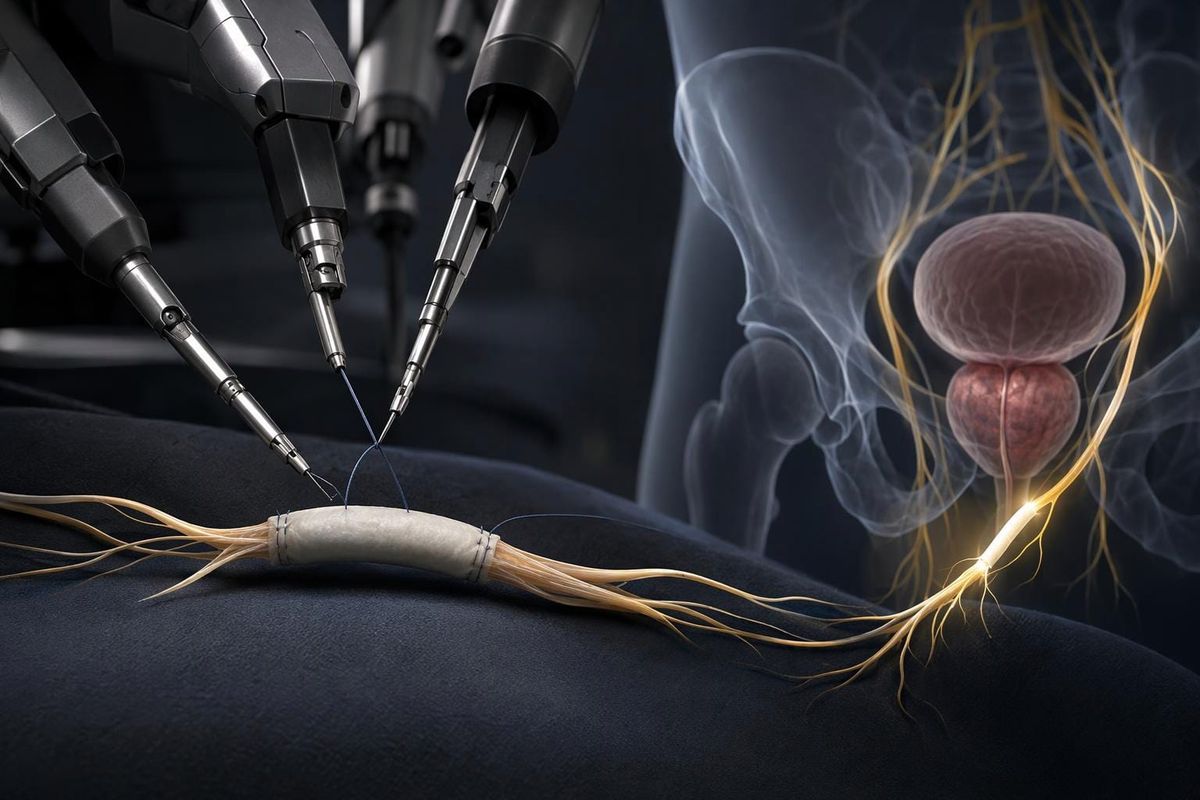
The company maps nerve protection to procedures preserving nerves and reconstruction to those removing them. Its COAPT technique fits a robotic surgical workflow: surgeons identify recipient targets, measure the gap, prepare the graft, suture its ends and check alignment, tension and fixation. Axogen identifies switching from radiation or surveillance to surgery, partial nerve resections and an approximately 3% annual increase in U.S. prostate cancer diagnoses as potential market-expansion drivers.
Adoption Before Insurance Coverage
Axogen's 2026 hospital-administrator survey found 56% would support adoption before broad insurance coverage. Another 80% said meaningful improvement in erectile-dysfunction recovery could justify pre-coverage adoption; 84% rated improved recovery very or extremely important, and 87% of urology administrators rated an erectile-function benefit important.
Patient surveys test intentions, not purchases. Some 77% said they would pay out of pocket, 88% would ask their surgeon about reconstruction, 87% would switch surgeons and 81% would switch hospitals. Among radiation patients surveyed, 78% said access would have made surgery more likely; 76% of patients under active surveillance said they would have chosen surgery.
The quality-of-life findings explain the company's commercial focus: 87% said erectile-function changes affected quality of life, 93% considered quality of life as important as cancer control, and 95% wanted doctors to do everything possible to preserve or restore erectile function. Concern about erectile dysfunction or incontinence would lead 82% to avoid or delay treatment.
Axogen management is scheduled for a fireside chat at Wednesday's Canaccord Genuity forum.
Sources
- 8-K Filing — Axogen, Inc. (AXGN) — SEC EDGAR
- Exhibit prostatecall11926deckfin.htm — Axogen, Inc. 8-K exhibit — SEC EDGAR
- Axogen, Inc. to Participate in Multiple Upcoming Investor Conferences — Yahoo Finance
- Axogen, Inc. to Participate in Multiple Upcoming Investor — globenewswire.com
- 8-K filed 2026-07-29 — Axogen, Inc. (earlier disclosure) — SEC EDGAR