Atrium's Mouse Study Shows One Dose Reversed Heart Glycogen Buildup, Human Data Targeted For 2027
The company will show the mouse results at a Friday poster in Chicago and expects first human proof-of-concept data in the second half of 2027.


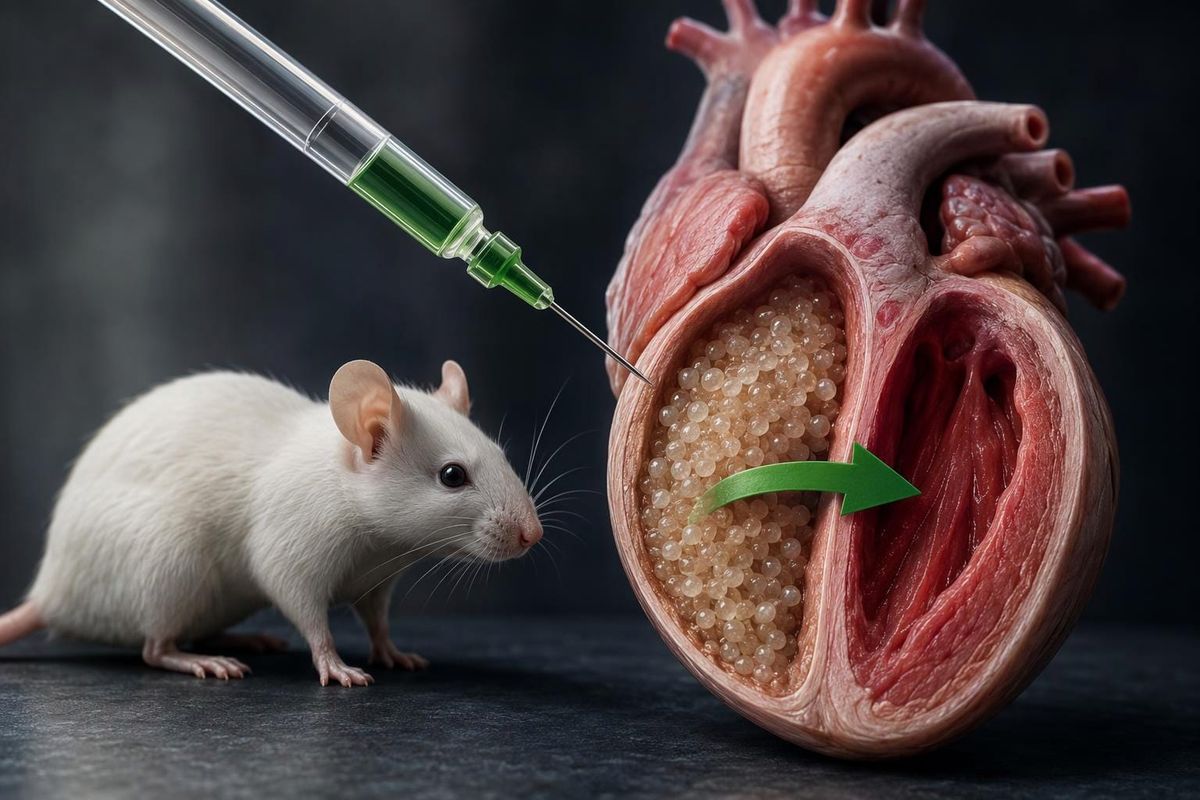
Atrium Therapeutics, a San Diego company developing RNA drugs targeted to the heart, said Monday that a single dose of a mouse version of its lead drug reversed cardiac glycogen accumulation in a new model of PRKAG2 syndrome, a rare inherited heart disease. The company will present the data Friday at 5:30 p.m. CT in Chicago and expects first human proof-of-concept data in the second half of 2027.
One dose, three weeks into disease
Atrium built the mouse model itself. It reproduces glycogen buildup in the heart, thickened heart muscle and abnormal electrocardiogram readings, the company said in an 8-K.
Mice received a single dose of mATR 1072, a mouse surrogate of the drug ATR 1072, after disease features had been in place for three weeks. Treatment reversed glycogen accumulation and improved hypertrophy and ECG parameters, according to the press release.
Chief Scientific Officer Husam Younis said the findings "continue to strengthen the scientific rationale for ATR 1072." He added: "We now look to the ongoing Phase 1/2 Corventis trial and expect initial proof of concept data in the second half of 2027."
The poster, titled on targeting PRKAG2 mRNA with mATR 1072, goes up at the Hypertrophic Cardiomyopathy Medical Society session at the American Heart Association Scientific Sessions.
The human trial behind the mouse data
Corventis is an open-label early-to-mid-stage trial that will enroll about 37 participants at about 15 sites globally, according to the updated investor deck. Its main goal is the incidence of treatment-emergent adverse events, a safety measure. The company says the drug has been cleared for trials in the U.S. and Canada and that the first patient has been dosed.
Atrium says no approved therapies address the underlying genetic driver of PRKAG2 syndrome. It cites at least 1,000 to 2,000 people with the disease in the U.S., and the deck says early work has already found close to 2,000 individuals with the mutation, so prevalence likely exceeds that estimate.
The company's filing carries its own caution that results in animal models and with surrogate molecules may differ from clinical trial results.
$264 million and a runway to 2028
The deck puts cash, cash equivalents and investments at $264 million as of June 30, 2026. That excludes a $15 million milestone from Bristol Myers Squibb and proceeds of a $50 million private placement announced October 8.
Atrium says its cash runway extends through the end of 2028, past the 2027 data readout. The deck also lists $1.5 billion in potential research and development milestone payments from collaborations with Bristol Myers Squibb and Eli Lilly, subject to the agreements' terms.
Beyond the lead drug, the pipeline includes ATR 1086 for PLN cardiomyopathy, with an IND filing targeted for 2027, plus two undisclosed research targets.
The next marker is Friday's 5:30 p.m. CT poster session in Chicago.
Sources
- 8-K Filing — Atrium Therapeutics, Inc. (RNA) — SEC EDGAR
- Exhibit d70523dex991.htm — Atrium Therapeutics, Inc. 8-K exhibit — SEC EDGAR
- Exhibit d70523dex992.htm — Atrium Therapeutics, Inc. 8-K exhibit — SEC EDGAR
- Atrium Therapeutics Doses First Patient in Corventis™, the First Interventional Clinical Trial for People Living with PRKAG2 Syndrome — Yahoo Finance
- Atrium Therapeutics to Present Nonclinical Data Showing ATR 1072 Reversed and Improved Features of PRKAG2 Syndrome During HCMS at AHA Scientific Sessions 2026 — prnewswire.com