Amphastar Sales Climb 8% — But Lower Prices And Factory Costs Squeeze Margins
Record BAQSIMI and Primatene MIST sales supported growth, while the board added $50 million to its buyback authorization.


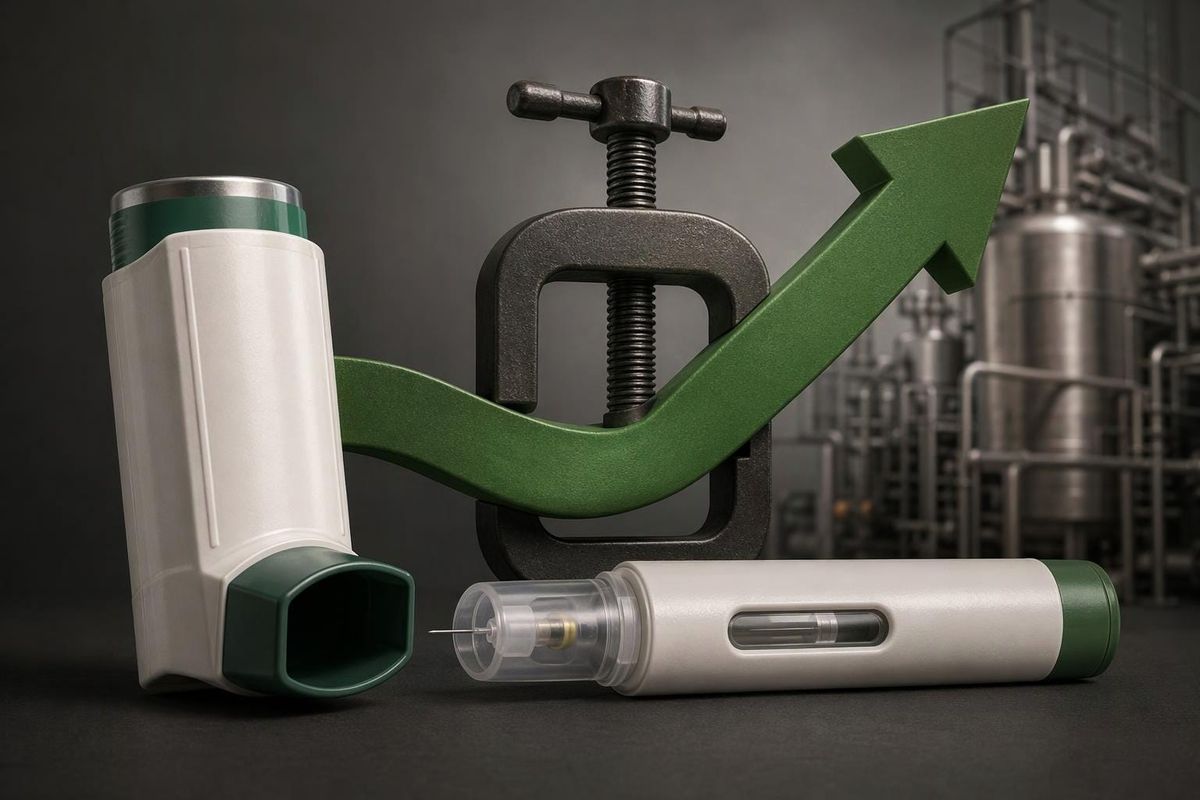
Amphastar Pharmaceuticals, which develops and makes injectable, inhaled and intranasal medicines, increased third-quarter revenue 8% to $207.6 million, according to results furnished with its SEC filing Thursday. Record sales of BAQSIMI and Primatene MIST helped overcome product declines, but lower selling prices and higher manufacturing expenses cut gross margin to 48.0% from 51.4% a year earlier.
More Sales, Less Margin
Gross profit grew just 1%, as the cost of producing revenue rose 16%. Amphastar attributed the margin squeeze to lower prices for BAQSIMI, glucagon and epinephrine multi-dose vials, alongside spending on factory remediation and an expansion in Rancho Cucamonga, California.
Quarterly net income nevertheless reached $37.8 million, or $0.87 per diluted share, compared with $17.350 million, or $0.37 per share, a year earlier. The comparison benefited from a prior litigation provision of $23.1 million in the third quarter of 2025; the case settled in that year's fourth quarter. That charge was the main reason general and administrative spending fell 57% in the latest quarter.
Adjusted profit, which excludes items including stock-based pay, intangible-asset amortization and litigation provisions, rose to $49.3 million, or $1.14 per diluted share, from $44.696 million, or $0.93 per share.
The longer view was less favorable: adjusted earnings for the first nine months of 2026 were $109.502 million, against $122.460 million a year earlier. Revenue over that period increased to $562.682 million from $536.782 million.
BAQSIMI Gains, Epinephrine Slips
BAQSIMI sales rose 10%, with increased unit sales adding $7.4 million to revenue. Discounts, rebates and a different customer mix lowered its average selling price, offsetting approximately $2.2 million of that gain.
Primatene MIST, Amphastar's over-the-counter asthma inhaler, posted 9% growth. A price increase introduced in the second quarter added $1.6 million to sales, while higher volumes contributed $1.0 million. Amphastar sells more than 25 prescription products as well as drug ingredients, serving customers ranging from hospitals and clinics to retail pharmacies.
Lidocaine sales increased 29%, as shortages at other suppliers increased demand. Newer products also contributed: ipratropium bromide, launched in the second quarter of 2026, generated $6.645 million, and teriparatide, launched in December 2025, delivered $6.4 million. Drug-ingredient sales from Amphastar Nanjing Pharmaceuticals contributed $6.2 million.
Epinephrine sales fell 19%. Remediation at subsidiary International Medication Systems slowed releases of pre-filled syringes and reduced sales of other products made there. The work responds to an FDA warning letter. Glucagon revenue fell 37%, primarily because competition pushed its average selling price lower.
Amphastar President and Chief Executive Officer Dr. Jack Zhang said the company was "investing in the manufacturing, quality and development capabilities needed to support future growth."
$50 Million More For Buybacks
The board added $50 million to its share-repurchase authorization Wednesday. The program primarily aims to offset dilution—the increase in shares caused by employee equity awards—and is expected to run indefinitely.
Amphastar generated $142.5 million in operating cash flow during the first nine months of 2026. Actual repurchase timing and share counts depend on price, regulatory requirements and other conditions.
The added authorization permits further purchases; it does not mean Amphastar has already spent the $50 million.
Sources
- 8-K Filing — Amphastar Pharmaceuticals, Inc. (AMPH) — SEC EDGAR
- Exhibit amph-ex99d1.htm — Amphastar Pharmaceuticals, Inc. 8-K exhibit — SEC EDGAR
- Amphastar: Q3 Earnings Snapshot — Associated Press
- Amphastar: Q3 Earnings Snapshot – WTOP News — wtop.com
- Amphastar: Q3 Earnings Snapshot | wusa9.com — Associated Press
- Amphastar Pharmaceuticals Reports Financial Results for the Three Months Ended September 30, 2026 — prnewswire.com
- Amphastar Pharmaceuticals, Inc. News and Press Releases | PR Newswire — prnewswire.com