Alector Books $162.9 Million In Revenue As GSK Exit Reshapes Its Drug Pipeline
A $100 million Genentech payment and an October share sale are expected to help fund operations into the second half of 2029.


Alector, which develops treatments for neurodegenerative diseases, booked $162.9 million in third-quarter collaboration revenue, primarily by recognizing payments previously deferred under its terminated GSK partnership. The company reported the results Thursday in an earnings release accompanying its SEC filing, with its former clinical programs winding down and its current pipeline built around technology designed to carry drugs into the brain.
GSK Exit Drives The Profit
Collaboration revenue was $3.3 million in the year-earlier quarter. GSK's July 6, 2026 termination notice and the end of Alector's remaining obligations allowed the company to record the outstanding deferred revenue.
Alector reported net income of $124.6 million, or $1.11 per share, against a loss of $34.7 million, or $0.34 per share, a year earlier. The company has no marketed products; the revenue increase came primarily from the accounting treatment of the ended collaboration.
Research and development spending reached $30.0 million, versus $29.4 million a year earlier. Option and licensing fees under the Spur Agreement outweighed savings from winding down latozinemab and nivisnebart and cutting staff. Administrative spending fell to $9.0 million from $11.5 million, mainly because personnel costs declined following those reductions.
Genentech Cash And New Shares
Genentech, part of the Roche Group, paid Alector $100 million upfront for exclusive worldwide rights to AL050, an experimental enzyme-replacement treatment engineered to penetrate the brain. Genentech takes responsibility for development, regulatory work, manufacturing and commercialization, while Alector keeps its Brain Carrier platform and rights to use it in its wholly owned programs.
The license also makes Alector eligible for up to $1.17 billion in additional development, regulatory and commercial milestones, plus tiered royalties on net sales. Those potential payments are separate from the upfront cash already received.
Alector also completed a sale of 36,600,000 shares at $2.05 each, generating approximately $75.0 million before offering costs. Priced on October 16, 2026 and closed on October 19, 2026, the offering added shares to the ownership base and included new and existing investors. Its price was approximately 7.3% above the October 15, 2026 closing price.
Cash, equivalents and investments totaled $138.7 million at September 30. That balance preceded the Genentech payment, the offering proceeds and a $15.0 million option-exercise payment to Spur Therapeutics Limited on Monday. Management expects the cash balance, Genentech payment and net offering proceeds to fund operations into the second half of 2029.
Brain Carrier Heads Toward Human Testing
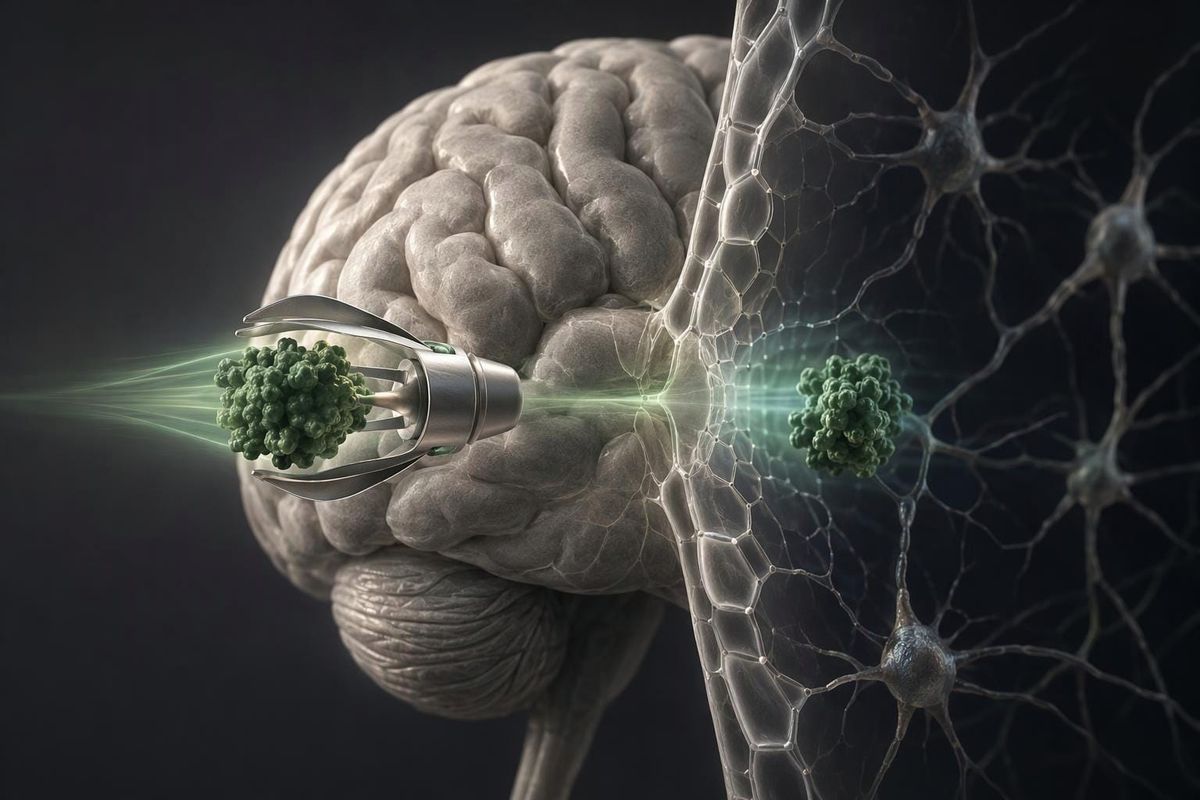
Every current Alector program uses its Brain Carrier technology, which is designed to move therapies across the blood-brain barrier. Chief Executive Officer Arnon Rosenthal said the platform addresses the challenge of “delivering enough drug to the brain.”
AL137, its Alzheimer's antibody candidate, is designed for monthly injections under the skin and to recruit brain immune cells to clear amyloid plaques. Preparatory testing is complete, and repeated injections were well tolerated in nonhuman primates. Alector submitted an Australian ethics registration in October 2026 and targets initial human dosing in healthy volunteers there no later than April 2027. It targets a U.S. trial application in the second quarter of 2027 to support early-stage testing in Alzheimer's patients.
The company targets human studies of AL164 and AL062 in the second quarter of 2028. These experimental RNA-based treatments aim to reduce tau in Alzheimer's and related diseases, and alpha-synuclein in Parkinson's and Lewy body dementia, respectively. In nonhuman primates, AL164 reduced tau messenger RNA by up to 76%, while AL062 reduced expression of the alpha-synuclein gene by up to 94% across multiple brain regions. Alector reported no treatment-related adverse findings in those studies.
The funding outlook extends into the second half of 2029; the next targeted clinical step is AL137's first human dosing in Australia no later than April 2027.
Sources
- 8-K Filing — Alector, Inc. (ALEC) — SEC EDGAR
- Exhibit alec-ex99_1.htm — Alector, Inc. 8-K exhibit — SEC EDGAR
- Alector Reports Third Quarter 2026 Financial Results and — globenewswire.com