
3D Systems Agrees To Pay $250,000 To Settle SEC Accounting-Controls Case
The SEC found that accounting failures delayed every periodic report due in 2024 and impaired the company's access to capital.


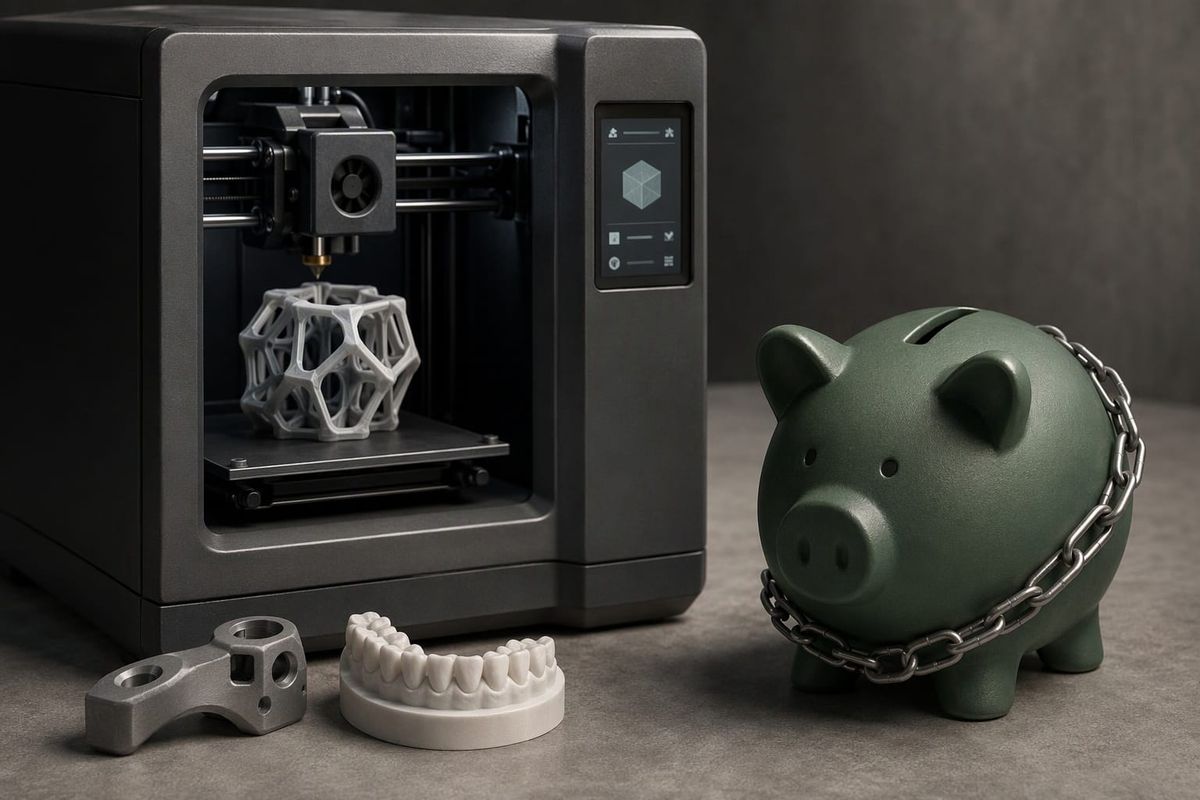
3D Systems, which makes plastics and metals 3D printers, agreed Monday to a $250,000 civil penalty in an SEC settlement over persistent accounting-control failures. The regulator's administrative order found that those failures delayed every periodic report due in 2024, impairing the company's ability to raise capital and pursue strategic transactions.
Late Reports Restricted Fundraising
The SEC found that 3D Systems reported serious weaknesses in its financial-reporting safeguards in six consecutive annual reports. Some problems persisted for five or more years, including controls over when and how the company recorded revenue.
The reporting delays cost 3D Systems eligibility for streamlined securities registrations and its status as a well-known seasoned issuer, another qualification used in securities offerings. Its 2023 annual report arrived on August 13, 2024, more than five months late; its quarterly reports due in 2024 were late as well.
The company settled without admitting the findings, apart from those concerning the SEC's jurisdiction and the proceedings' subject matter. The SEC found violations of Exchange Act Section 13(b)(2)(B) and Rule 13a-15(a), which require adequate accounting and financial-reporting controls, and ordered it to stop further violations.
Automation Failed To Fix Revenue Accounting
3D Systems used Excel spreadsheets for certain revenue calculations from at least 2020 through August 2023. Its auditor and consultants repeatedly found the process inaccurate and unreliable, though the problems did not lead to restatements of previously issued financial statements.
An automated replacement introduced in August 2023 generated incorrect calculations and accounting entries through December that year. The SEC found that management configured it incorrectly and supplied incomplete or inaccurate pricing and other information. Those problems delayed delivery of full, accurate documentation to the auditor.
Consultants hired in 2021 and 2022 identified inadequate staffing, weak accounting procedures and persistent revenue-control problems. Management expanded the repair effort in 2023, hiring a chief accounting officer and giving consultants greater authority.
During 2024, the company eliminated that position and ended several financial-transformation projects. The SEC found that senior management failed to provide the accounting resources needed to fix the problems until 2025.
Two Weaknesses Still Need Repairs
During 2025, 3D Systems resolved three weaknesses out of the four identified in 2024, including the process for closing its books. Timely reports during 2025 restored eligibility for streamlined securities registrations. The SEC considered the company's cooperation and recent repairs in accepting the settlement.
The remaining problems concern revenue accounting—specifically pricing individual obligations within contracts—and accounting for stock-pay awards tied to market performance. The company committed to resolving both by December 31, 2027.
Revenue controls cover a business selling printers, materials, software and services to healthcare and industrial customers. Its Healthcare Solutions business serves dental and medical markets; Industrial Solutions covers aerospace, defense, transportation and general manufacturing.
3D Systems must publicly report whether management considers those weaknesses fully resolved by its 2027 annual report or March 31, 2028, whichever comes first.
Sources
- SEC administrative order 34-106955 — 3D Systems Corporation — U.S. Securities and Exchange Commission